Showing posts with label english. Show all posts

Wednesday, February 11, 2009

Photographs from ‘Follow the Women’ bring message of hope


A collection of photographs focusing on daily life in the Middle East by Turkish photographers Ayşin Özer Başkır, Şirin Çizmeci, Serap Ertüzün, Selma Şevkli and Ela Esra Günad is now on display at İstanbul’s Cemal Reşit Rey Concert Hall.

The five photographers are members of Follow the Women (FTW), an international organization that has been conducting cultural and social youth exchange projects for more than 30 years. FTW was founded under the leadership of Detta Regan, who traveled to the Middle East as a teacher and drew attention to the situation of women and children in the region using her bicycle as a tool. The organization brings together women from all around the world and since 2004 around 500 women have cycled across the Middle East every year, hoping to contribute to peace efforts in the region, FTW Turkey coordinator Günad says in an interview with Today’s Zaman.

Starting from Lebanon, women from 30 different countries traverse the 300 kilometer road stretching across Syria and Jordan and into Palestine, Günad explains. “Our objective is to create public interest in the region for sustained peace. We observe that the group that is most affected by the conflicts in the region are women and children. We primarily want to emphasize this. In order to share the experiences of the people in these countries and support them, we organize this cycling event every year,” she adds. The women go to villages, refugee camps and bombed and decimated residential areas to see how daily life continues in these places.

Featuring 45 images from last year’s journey, the collection that is currently on display emphasizes the fact that life goes on in the Middle East in spite of the harsh conditions people must deal with in order to survive. “Their daily lives still continue in the places that include traces from the occupations, under the control of the armies and among the ruins. In every frame, you see a story showing you how to go on with life. Unfortunately, peace cannot be achieved [merely by] signing cease-fire arrangements,” she says, underlining that in addition to peace there must also be efforts to create better conditions in the region. “You will see people in this exhibition who do not lose their hope for peace.”

“Recently we learned from the press that the check points [in the Occupied Palestinian Territories] are being shut down, which means access to basic human needs, such as water, food and medicine, is blocked. Sometimes they wait four or more hours at the control doors to pass in order to go to school or to their jobs. If they are lucky that day, they can pass through, but they never know what will happen the next day. Sometimes after waiting many hours they go back to their homes,” Günad explains, pointing out that they wanted to share their experiences in the region with Turkish citizens this year.

FTW increases its membership numbers every year with new contributors from all around the world. It is not necessary to be a professional cyclist, Günad says, citing the example of a Turkish woman who joined them from Diyarbakır after learning how to ride a bicycle from an 11-year-old child. Whoever wants to contribute to efforts for peace in the Middle East can contact FTW at ftw-turkey@yahoogroups.com.

The exhibition in the Cemal Reşit Rey Concert Hall foyer will run through Feb. 25.

11 February 2009, Wednesday
RUMEYSA KIGER İSTANBUL

Tuesday, April 01, 2008

Requem for a Normal Turkey!


In Turkey, for most of the people in my generation, who were born in 1980’s, it is very hard to understand and analyze what is happening in Turkey at the moment. Are we threatened by political Islam? Are we going to become Iran? Is a new military coup coming up? And the most important question: Do we have to make a choice between being secular and Islamist in order to survive in Turkey?

Our parents’ generation suffered from military coup consequences so badly that they decided to keep us away from the politics. Therefore we didn’t really feel like active participants of the system. We thought our job was to educate ourselves to get good jobs, love our country through national anthem and our flag, and vote in the elections for the parties that are suggested by elderly family members or by our favorite mainstream newspaper’s columnist’s choice.

I didn’t know what democracy was for a long time. I didn’t know the difference between the state and the government in Turkey. I accepted everything I was taught in public schools without questioning. Until I lived in better working democracies, I had never questioned the fact that I was being raised devoid from analyctical thinking.

I thought more or less everybody would live under similar circumstances in the world. Therefore everyhing I consider abnormal and unfair now, had seemed normal and acceptable back then. Somehow, I thought the state and all its policies were holy. They were not subjected to question by ordinary citizens. Indepedent courts would take care of those kind of serious issues. Who was I to suspect?

Then I started to change through discovering the world. I realized that I live in a democracy and I have rights. All state, parliament and government members, even the officers working for public, are there for me. They are responsible as much as they are authorized. It is my right and responsibility to check on them.

I started paying attention to understand them. What I saw was power struggle. I wanted to go deeper in this analyze, they wanted me to make a choice. The deeper I went, the more dissaponting it got. I have seen so many unsolved problems that has been going on, since Turkey was formed. I saw an army thinks that it is the owner of the country and can intervene in politics whenever and wherever it wants. Then I saw politicians can use anything to get votes. I realized the key factors of getting votes here are religion and nationalism.

I kept researching. Most of the Islamic oriented people wouldn’t call themselves Islamists as the seculars call them. I got surprised. Many of the seculars were somehow practicing Islam, I got amazed. And both sides live very similar every day lives, without touching each other.

If they give a chance to each other, they will see that they are not much different from one another. If there is a Turkish identity as claimed and owned by the majority of population, there has to be a lot of common grounds to reconcile or at least meet as a first step.

Moreover, there are so many people who don’t care about religion as a priority in life. Just because it is imposed that way, they feel like opposing religion. Converting people is a religious behaviour, if one is a modern secular why is the need to change people’s minds? Where does freedom fit in this picture?

I wonder how much of our population can take themselves out of this polarized situtaiton for a while and see that it is just a power game between obvious and hidden actors. I don’t want to live in a so-called democracy anymore, I don’t want the political parties to be closed down for no reason, I don’t want a new military coup, I don’t want the politicians to blame each other only and do nothing about Kurdish issue, Alevites, headscarf, non-muslims, education, health, traffic and so on. I don’t want them to abuse religion and nationalism anymore either. I don’t want Turkey to be ‘holy’ anymore. I just want a ‘normal’ country that can meet up its citizens needs and is ready to be questioned by them any time.

*photo by David Klein

Fitna: Stuck Between Propagand and Prejudice


Have you seen the movie Fitna? Before reading this, please watch it. Because it is not to be understood just by thoughts but also feelings. Dutch PM Geert Wilders claims to have made it. That makes me wonder what kind of work has he put in it. It seems to be done in half a day with no budget. He just put extreme pieces together that can be easily and freely found on internet and blamed all the actions on the Quran. That is a smart and banal way of affecting people. Actually it might even be considered ‘religious’ in its own unique form, as it aims to give people ideas with simple and weak reasoning. For someone who don't know much about Islam and who is a part of the consumer culture, it can be very comforting and easy to to believe in that kind of propagand.

One thing makes the movie seem "well intended" is that it doesn't reject Islam or hate it (on surface), it just innocently suggests to get rid of the parts of the Quran that encourages violence. But if the movie was sincere, it wouldn't portrait Prophet Mohammed with bomb on the head one more time after all the reaction during cartoon crisis.

If you are Muslim, would you change your mind about your belief and think about changing your holy book when someone who portrays extremists as believers suggests?

Or if you are not Muslim, would it convince you to believe that all Muslims are potential terrorists when you see extremists, dead bodies, and verses following each other?

If there is anyone to blame, it is not this provocative Wilders but Muslims. They should be able to express themselves, explain those verses and convince the world (if needed) that Islam is not a religion of violence. What do those verses quoted in the movie actually mean? Some authorities or even someone who study them should explain them. Otherwise more and more attacks are going to leave bigger stains on Islam, Quran and of course Muslims. And if good ones can't convince the bad ones, they will take over the power and actually change the Quran. Then Islam is going to lose its most important charactersitic that it has been the SAME book for 13 centuries all over the world, not one letter has been changed.

I think the problem lays here: Religion is an important component of life for many people. And every religion has its own language (by that i mean a way of interpretting the world/life) Even different sects in one religion have different aspects on issues. What we are doing is that we are trying to understand someone without knowing her/his language. Let's say someone knows two languages of religions (Christian theology professor on Islam) but still remains as a Christian. Because there comes another important component of religion, faith, that we cannot comprehend with minds. and there is no space for "heart" (where the faith is) in our "modern language" I guess that leads us to beginning of modernity and secularism which proves that we cannot understand the religion just by looking at the religion.

We develop relationships with people whom we share the same language. We might believe in different religions, ideologies, we might belong to different nationalities, countries, but we can stil have a relationship. It is possible because religion and nationality, our two very important identity components, may not be the most important components of our personalities. Having similar interests or sharing another ideology that can fit into those big ones (humanism, for instance) can become more important than others. For different reasons, we can build bridges with ‘others’.

The only thing we need is some common language for the people of different religions and nations that share similar values. That cannot be common ancestor Abraham only, what if we didn't have anything in common historically? And what if as modern people we don't care that much about long time ago on our every day lives? What if some of us are religious and some not?

I guess most of the people want peace and dialogue but not strong enough. They tend to be tricked easily by politicians or any other leaders. Instead of judging each other with big labels like religion, nationality or race, we can try to find some shared common values that will connect us. I know that what all of us want at the end is to feed ourselves, raise our children, be safe and happy basically. That’s the same in every culture and our happiness and safety depend on each other’s happiness and safety.

Extremists are the ones that exist in all ideologies, all religions, all nationalities, not just among Muslims. How about dividing the world as Extremists/Others, instead of Muslims/Others? Then maybe we can think of a way to convert extremists to human beings instead of converting Muslims to a transformed Islam.

Thursday, November 15, 2007

Reflections on International Summer School on Religion and Public Life

Is it Possible to Change?

For about two months ago, at the end of a mind-spinning India trip, I had to join a group of people whom all come from different countries, identities, boundaries, religions and looks for two weeks. Meeting people at conferences, having casual/ intellectual conversations were probably things we all do frequently. Living semi-together (under the same roof, in different rooms), however, was something new and it changed the concept of the meeting more than I had expected.

First, I saw myself trying to categorize people hastily. Earlier I do it, earlier my mind would be rested. Gender, nationality, religion and profession were my tools. I think I worked unconsciously on that for a few days and then I gave up. I had to come up close to 30 different rooms in my brain. Day by day, I realize everybody was unique. I realized how individual differences can be very significant. There were times when I managed to put two people in the same bubble, but I would see it would easily break when a controversial topic comes up. Everybody being different and having the same opportunities (right to speak, food, room, travel) has been my dream society for a long time. I was at the right place. By the end of the second day, I was physically excited to be part of the summer school.

At the first processing session, I caught myself with so many prejudices. When I was told to find the same and opposite of myself, it was very difficult to find someone filling these positions. What was the same? Not similar but the same, this was heavy. It was not my choice, but I had to find someone. This situation reminded me of other similar experiences in life. We feel not ready to make choices, commitments, but we have to do them anyway. It never feels like the right time, right place. So we go with quick judgments. In such limited time, without knowing people well, I did so. My decision on opposite, depended on my assumption of someone’s political view (which later turned out was not true), and the same looked like a mix of different identities (later turned out very different identities). I realized that I make assumptions on people depending on their groups, religions, countries rather than age, gender and profession. Somebody close to my age, a female, and even the same profession means nothing to me to have a connection. If I think we share some values on intellectual level, or politically, I unfold easily.

More than anything, nationalism and secularism have been bothering my mind. Talking and learning about those two subjects were very helpful for me. Although I was learning for my part, I felt that some of the information we were getting could be too complicated for the ones who did not know much about the subject. Kurdish issue, for example, was something we did not have a lecture on specifically. Many people did not even know why Kurds were not recognized as minorities. Under these circumstances, we watched a movie called “Journey to the Sun” which I did not know about beforehand. I strongly reacted to the movie as I saw it as a learning tool for the group. Many people who do not know about Kurdish issue in Turkey, would automatically believe that Turkish police would treat all Kurds badly, Turkish bosses would yell and take advantage of their employees just because they were Kurds, and many other assumptions that could be set to minds very easily. Moreover, the time that incidents take place were not mentioned so that the audience would think that is usual for Turkey. At this time, I was very part of this group and I really cared about people’s first assumptions on the issue. I would be very comfortable discussing the movie on an intellectual level if I were with people familiar with the subject. Yesim Ustaoglu is a director who is known for her sided political movies, that is why we did not see any reasoning in the movie. As long as Turks keep marrying Turks, I think it is a problem of state and politics. Comparing the Kurdish issue to the Palestinian issue would be totally nonsense. I strongly defend this opinion, and I know many people want to see the two almost identical. That is why I brought up the question of talking about Palestine. If we were to discuss state oppression, many more people were informed about Palestinian issue compare to Kurdish issue. I never intended to offend Adam related to his identity. On the other hand, I was not comfortable an Israeli commenting on Kurdish issue in Turkey, in front of Turks and Kurds almost as an expert. This was the time I changed my mind about my thesis subject. Before, I was planning to do research about the wall separating Israel/ Palestine and its effects on both sides. After this incident and a few others during summer school, I thought I would not be objective or it would be funny on an international level to present something in a few months deeply. I decided to solve my problems with secularism and nationalism first and I decided to understand secular nationalism in Turkey.

Another important thing happened during summer school was constant questioning and thinking. We were listening about ideas and countries first, and then we were commenting back on them by sharing with each other. I tried to see how an idea can reflect itself differently on different people. How a religion can be interrupted differently. How nationality can be an important component of identity for one person and how gender is more important for another one. In this group, if I looked a little carefully, I could see many details that shape identities, relationships, and even new groups.

While meeting, connecting and sharing with so many different people, I learned a lot. Some of the information I had, got updated, some changed. At the end of the 10th day or so, I was very confused with everything I learned. That was the time when people started to ask each other: “So, what do you think is going to happen?” My question was less patient: “What’s happening?” Many values I respected were in danger. Whose truth was more true? How come people believe in different things? How come people believing in different things can be married? Why am I not allowed to marry a non-Muslim? If my religion is not the most important part of my daily life, why should it be of my entire life? Or do I even have the right to question this rule? How about other religions? How much of them can we question? How is it possible to manage believing and thinking at the same time? Jews seem to be doing this very well, what is their secret? And many other questions were wandering in my mind. The most important question that I still couldn’t find answer was at the top though: Is my faith in danger if it reduces itself to equality with other beliefs? Do I have to believe that it is the true and best one in order to keep my devotion to it?

Going to Alevite community was another lifetime experience for me. This was a belief and community that I was not familiar with. I observed the ceremony very carefully, and took notes from the lecture. As much as I respect it as a culture, I do not/ I cannot see it as a religion. There are no written references about the belief, and it rejects some certain requirements of Islam. Not only that, but also the socio economic level of the society caused me some prejudice. I am sure I would be less judgmental if the women in the room were 30-40 year old college graduates. Is that why I felt myself closer at the ceremony in Adam’s room, Bursa? Is it because all these people were clever and open minded to me so the thing they believed in must have been more meaningful? Or is it because it was closer to my faith and the way it is practiced?

Identifying myself with my race, nationality and religion would not be something I like to do at the first place. I would mostly prefer to be perceived with my individual qualifications. Despite my will, the first thing people ask when I go abroad is “Where are you from?” “You Muslim?” Nobody cares what I study or what I think about world hunger. Religion and nationality are critically important to identify one another. I do not specifically include or exclude myself from those groups. I simply try to focus on different details. Until we went to Selimiye Mosque with the group, I had no strong feelings of belonging to any group. I thought there were no groups that would accept me as I am, and there were no groups I would accept them the way they were.

When I went to Selimiye, I felt a strong connection with the mosque. Maybe it was because all the mosques I go are very touristy and I do not go very often, but there was something different. After a very long time, and perhaps after heavy conversations about religions and borders, I felt like a “Muslim”. I covered myself properly and I felt like it was my territory inside the mosque. At this time, I was not a female, not a summer school fellow, not a graduate student, I was simply a Muslim. I focused on this spirituality and prayed for a few minutes. Little bit later, I saw some of my group members were coming in, and women members were not covered properly. As a person who does not care about this at all outside, I got strongly offended by this behavior in the mosque. I did not think about it before, I was just feeling that it was wrong. I didn’t want to “warn” anybody, still being respectful; I went upstairs to the women section which was empty. I kept praying by myself in peace until the other female members of the group showed up. I avoided eye contact and just moved to the other side without giving them any explanation. It was about prayer time and I wanted to join the “Muslim group” to pray together. Still upstairs but far away from the other women, I looked down and saw that they were all men. It would be awkward to pray with men, I got confused. I looked back and saw the women, no, I wanted to be with Muslims. I looked down, I saw men, I had to be with women. Stuck in the middle, I looked at myself and my situation was exactly the same what I am dealing in life. I feel close to many groups but I don’t belong to any of them. Either I don’t want them or they would not accept me, at the end, I am alone. I am trying to figure out everything by myself. This state of loneliness seemed very depressing for a few minutes. I realized many things in such short time with a simple experience.

When I got out I felt like sharing this experience with someone. Looking for someone “similar”, I walked to Enver. As he is a “Muslim”, and a “thinker”, I thought he would understand me, maybe he had similar experiences. He listened to me carefully and gave me the comfort of “I feel you, I understand you” My estrangement lasted a few more minutes and then I got back to being a member of the group. Suprisingly, I was ashamed that I moved away from some of them in the mosque rudely. I felt like giving an explanation but I couldn’t. The next morning, Rahel asked me if they offended me in the mosque, she also felt bad that I moved away. I was touched that she sensed something and cared to learn about it. When I shared my experience, I knew she understood and felt it very well. Later on, we talked about many things, and it was very comforting to talk to somebody who can understand what I have been through.

What was more important to me while opening up to people? If you ask me the people’s common characteristics that I had a stronger connection, I cannot do any generalization that I did at the beginning anymore. They were Muslim, American, Jewish, Bosnian, man, woman, young, old, professor, student etc. I thought the most important feature I was looking for was sincerity and analytical thinking capacity. Everything else were spices, the taste was hidden at the deep.

Nationality and religion are very important keys to understand the people, but people are a lot more than that. Although they keep people “safe” and “control” them for their own good, they build strong boundaries that can prevent connection with one another sometimes. I guess it is true then, we cannot love through control. In this summer school, I questioned the limits of this control and left them behind to reach people. I think I am getting closer to build new borders now. I discovered them first, questioned for a long time, removed some and added some. At the end, I do not think it is possible to completely get rid of them, but they are subject to change as everything else. And this potential gives me hope for more improvement.


07.09.2007/Istanbul

Thursday, March 01, 2007

Power of Everyday Life: Never ending Resistance in Palestine


Originally published on Todays Zaman, 25 February, 2007

An ordinary day for West Bank, four locals and three foreigners are trying to go to Jenin from Nablus. Three guys in the minibus get off right before the check point and get back on 10 minutes later from the opposite direction. I have no idea what’s going on! Are they terrorists? Are they fugitives? The driver does not speak any English; he just signs us to be quiet while crossing the check point. There is no time to question and analyze the situation, so I follow the orders.

On a land where the borders change so frequently, where roads are blocked almost every day, where it is almost impossible to travel among the cities, Palestinians come up with new tactics every day to deal with the Israeli strategy. The conflict does not only take place in Gaza through guns, but also in daily routine all over the country. The strategy is deterrence; and the tactic is resistance through patience.

Many students I’ve talked to say that they have to walk to university as the tanks block the roads. They remember times when they walked 8 kilometers long in freezing cold weather for weeks, sometimes months. Or if it is a longer distance, they drive through the bush; 30 kilometers road takes 2 hours. The day I rode the minibus, it was forbidden to travel among cities for those whose ages are between 16-45. Palestinians are accepted as potential terrorists regardless of their education, profession, or any other qualification except the age. We are used to the prohibition of 16-45 year old Palestinians in Al-Aqsa mosque. But when they are not even allowed in the old city of Jerusalem, or intercity travels in West Bank, that brings questions in mind. While Israel says that they are simply doing some archeological research or excavation work, they do not exactly announce the details. By doing so, they raise the tension as Al-Aqsa is the third holiest religious site for Muslims. Not only Muslims but also Christian Palestinians get frustrated and and angry about the situation. Sleiman, an Orthodox Palestinian resident of Jerusalem, says that Al-Aqsa is the most significant symbol of Palestine. Christians care about the mosque as much as Muslims.

Israel follows a strategy that gets people confused and frustrated, and creates reasons to tight the security. While they ban 16-45 year old men from the mosque on Fridays before, they can do it every day now and not limited to Al-Aqsa only. For more than 15 days by now, many shop owners in the old city, could not get to work. There are security forces all over the old city checking ID’s constantly. At Qalandia gate, security check continues. Many people are refused to go from West Bank to Jerusalem, even if they have permission. Finally in the West Bank, there are more and more check points every day to keep Palestinians away from Al-Aqsa, from Jerusalem, from each other, simply from everything. If Mr. Olmert gave a better explanation to Muslims rather than showing a few pictures to PM Erdogan privately, they would not need to humiliate and frustrate all Palestinians every day and deal with protests if not explosions soon.

Israel continues to complicate and make Palestinians’ lives difficult every day and Palestinians keep being silent and patient. Most of them continue their education and trying to make a living in very difficult conditions which the world is missing out. Only a few cannot put up with occupation, imprisonment, lack of resources, and death of loved ones, and choose the easy way; killing. Instead of focusing on the majority who honorably continue living despite everything, the media talks about suicide bombers only. And most of us think that Palestinians are bunch of suicide bombers or miserable people who beg for bread.

Most of the Palestinians I met have been to prison during intifada. Spending years in prison taught them that they are not going to win by guns but education and protecting their culture. My opinion after seeing 8 cities in West Bank, they are quite successful about it. The hospitality they have, the mature comments they do about the conflict, their understanding of nationalism, explain their strong bonds to the hold land.

One thing they know quite well is the difference between Judaism and Zionism. While Israel recognizes all Palestinians as potential threat with prejudice, there are many Jews volunteering in West Bank without any ‘security’ problems. Palestinians are mature enough to give a chance to anybody from different religions and ethnic backgrounds as long as they feel the sincerity.

It would be unrealistic to expect peace anytime soon. To make realistic predictions though, we should try to pay a little more attention to everyday life in Palestine. Instead of asking “Why cannot get independent?” we should ask “How did they resist for so long in such hard conditions?” Then we can realize what hold them together, and maybe think about sending books instead of guns and bread.

selmasevkli@gmail.com

Friday, February 23, 2007

Making a Difference in Palestine


Originally published on Turkish Daily News, 23 February, 2007

A rose garden surrounded by barbed wire… A nation stuck in the middle of anger and patience…A country has been under occupation just for so long…

I was in the West Bank for the last ten days to see what is actually going on there. I am not a journalist, I am not a diplomat, not a businessman either. I am just a simple human being who naturally cares about what is happening in the world and believes that anybody can make a difference.

Although Palestine consists of two parts, West Bank and Gaza, there are actually more than that. Every city has its own rules, regulations, ideologies and culture. As the cities are isolated from one another by check points, many people are not allowed to travel among the cities. If you are from Ramallah, you cannot go to Nablus, if you are from anywhere in West Bank, you cannot go to Jerusalem or Gaza Strip. If you are from Gaza Strip, this is the worst; you just cannot go anywhere.

When you are a foreigner, things are a little bit easier. As long as you are patient enough to wait at check points and be subjected to questioning by Israeli soldiers, it is quite safe to travel in the West Bank. Gaza Strip is strictly prohibited for everybody.

All cities have an old city that has a souq and historical buildings, mainly from Ottoman period. All cities also have refugee camps from current Israel period. Most of the cities have universities that offer short term programs for internationals, particularly in Arabic and Palestine- Israel conflict. All cities have NGO’s working in various fields from education to health, conflict resolution to home demolishment.

It is so usual to see volunteers from Europe and U.S.A. whereas there is nobody from Middle Eastern countries or Turkey. It was such a shame to be the first Turk in the cities and refugee camps I have been to. Turkish youth seem to be adopting Western lifestyles, traveling is on the rise but mostly to the west. There has already been enough written and commented on the region, but nobody actually does anything. It is not easy to turn the situation overnight, but politics is not the only way. By teaching children English or handcraft, or just singing with them, volunteering as editors, organizers, and many other different positions in various fields, we can show them that we care about them and we can give the children hope.

Martyr or Murderer?

In Jenin Refugee camp, streets were full of posters of ‘al-Aksa Martyrs’ who kill themselves and many others in Israel as suicide bombers. An 18-year-old boy who killed 41 Israeli soldiers in Tel Aviv 3 years ago, is also considered as a martyr by his family and community. His mom, who does not want to reveal his name, never knew he would do such a thing. He never gave a sign about it, except looking mom in the eyes for a long time before he left home to commit the action. I ask the mother, what would she say if he told her, would she try to stop him? She gets confused, she has been asking the same question to herself, what would she do? As he did not kill any civilians but the soldiers of the ‘enemy’, she does not think it is wrong, therefore she is proud of her son. But when it comes to her feelings she feels very sad losing her 18 year old child and says “I would stop him.”

Walking in the city with guns, having pictures with guns, even suicide bombing are considered normal if not honorable in Jenin. As they don’t have an army or any official force to resist the occupation, as they all have been to prison for involving in politics, as they don’t get paid for 11 months, as they are not allowed to leave their city, and as they are labeled as terrorists, they don’t seem to have many options. The youth either involve in politics and other organizations, or they go for the education and express resistance in more humanistic way, even though they are not treated humanistic most of the time.

Choosing the Hard Way

Another example is a 35 year old education professor from Nablus. Ashraf Sayegh went to prison for throwing stones to the soldiers during first intifada at the age of thirteen. His father died while he was ‘inside’ and he couldn’t complete his primary education. While in prison, he had a long time to think about what to do in life and he decided to continue study by the courage of his older fellows. After release, people of Asqar refugee camp supported him and he completed primary and high school. After that he went to university in Amman, and now he became a professor in education. He says that he saw it wouldn’t go anywhere only by politics so he chose the more difficult way, education. Instead of going to a dead end for himself and his country by guns, he studied and now letting others to do the same.

Later on, other residents of Nablus Asqar Refugee Camp were also released and they founded Asqar Social Development Center. The center offer many classes and activities for children, a public library, computer training center and rehabilitation for the disabled people. Amjad Rfaie, director of the Social Development Centre says, “the occupation and the hardship it brings to our lives, should not take our culture and hope away from us. We had to make a choice between being ignorant, potential prisoners or martyrs, or keep up hard work and fix our problems by solidarity to give our children hope. We chose the third way, and we are happy about it.”

In order to keep the new generation away from guns, there needs to be more social/ educational activities for children. Current organizations welcome anybody from all nations to make a difference. Most of the case they provide food and accommodation, if not it is easy to find places in refugee camps and they welcome foreigners who share the hard times with them. The hospitality is indescribably sincere and welcoming. We may not change the ideologies or regimes, we may not remove the guns from the world, but we can easily ease people’s lives who don’t have the privileges we do. It seems more realistic to offer alternatives rather than becoming violent or waiting for peace.

Tuesday, October 10, 2006

Daily Life in Iraq: Before and After the War


Selma Sevkli

Wednesday , 04 October 2006 (published on Turkish Weekly Journal)


The 9th International 1001 Documentary Film Festival started on 29th September 2006 in Istanbul. There are 127 films under 12 subtitles including the Middle East, Portraits, Cultures, and various country profiles such as Poland, Finland and Bangladesh, etc. The screenings take place at the Ataturk Cultural Center, French Cultural Center, Italian Cultural Center, and Nazim Hikmet Cultural Center until 5th October 2006, all free of charge.
I had a chance to see four of the documentaries so far and I was especially touched by one called “In the Shadow of the Palms: Iraq”. Wayne- Coles Janess, a young Australian director, started shooting the film before the attack, continued during the invasion until it ended.
During the war, we mostly saw officials making statements about the war, and the suffering of ‘ordinary citizens.’ But what did they think? What was their opinion? How did all of this affect their lives and hopes about their future? Janess got into the midst of brave action and went to Baghdad two weeks before the war, and for six weeks he lived with locals and talked to them. Most of these ‘ordinary’ people were very much aware of the situation. They knew the war was coming, but they knew it was not coming to ‘liberate’ them. One teacher from a high school gives his opinion: “It is not about democracy, it is not even about oil simply, it’s US’ new world order plan and Iraq is the second stage of it after Afghanistan. US made its decision long time ago, and for people who it wants to ‘democraticize’ we haven’t been asked our opinions.” Then the camera moves to one of the classrooms in the school and we see one Christian and one Muslim student sitting together. They both clearly state that religion is not a source of conflict for them and continue: “We know the war is at the door, but we are not afraid. We are not going to leave school until it is bombed and we are not going to leave our homes either.” Apparently, students are very angry with Mr. Bush, as one starts cursing at him badly.

After the school scene, Janess takes us to one of the Wrestling Clubs, which is a popular spot for the young boys. Wrestling and winning medals seem to be a good motive for them to deal with such hard time. They keep going to the club every day for training until the war starts. They are not as aggressive towards America as the students. These young boys like the way they live, and they simply want to maintain their lives. They do not complain about a lack of facilities, they don’t complain about having to buy the uniforms themselves when needed. Would it be too much to ask not having a war after all?
Then we see a traditional coffee house where men hang out, sometimes all day long. There is a group of guys discussing philosophy and literature. One explains that they get together every week, set a topic and discuss it. Although they know the war is only a few hours away, they are calm and confident. One of them makes a joke: “Do not record me boy, you want the Americans to kill me?” and everybody laughs. As some think, Middle Easterners, Iraqis in particular, are not bunch of suicide bombers that make plans for ‘jihad’ all day long. Iraqis do not only live for after Friday prayer demonstrations either. Even though they are “Arab”, even though they are “Muslim” they have the ability to think, question, and have a great sense of humor.
Unfortunately, the war begins and we face one of the bitter faces of it: A big bomb blast in a house full of civilians. Women cry, men curse, firefighters try to get in, crowd runs around without knowing what to do. Images flash of two girls under the wreck, trying to be rescued by neighbors grabbing pieces of their house that collapsed onto them. They finally get one out, we do not know of the other, but this is just the beginning. We get used to it so much that hearing death and bomb news from Iraq becomes just a regular routine by now. As Stalin said: The death of an individual is a tragedy, the death of a million is statistics.”
During the war, some people continue their daily lives despite everything. They cannot get into military action, especially the old ones, but they express their resistance by not escaping. Some women get their provision, some defend Saddam, and somehow life continues.
War is not only difficult for Iraqis, but also for Americans residing in Iraq. Janess lets the soldiers express their point of views. One says, he has four children back home and he didn’t tell them that he is at the war zone but somewhere else at training. The soldiers trying to provide security in the city have a hard time; they have to keep eye on people very carefully. They obviously are not enjoying their duty. War is not a joyful event for anybody. Attacking or defending, winning or losing, liberating or dehumanizing, both sides are human beings that have families, hopes, worries, needs, etc. States and authorities make it look like a terrible game: There are sides, there are goals, and there are big words like democracy. But it is not that simple. There are human beings, there are feelings, there are dead people, there are injured children, there are lost futures. It is not two states debating on a table. Big men make the plans and ordinary suffer.
In the end we see refugee camps outside the city in a miserable situation. People after bringing all their documents, dealing with bureaucracy even under attack, get into tents under rain and in mud. One complains to the camera: “Is this liberation? Is this democracy? Saddam was not the nicest man in the world but we at least had jobs and houses. What do we have now?” It has been 3.5 half years by now and the number of refugees increase while the hopes decrease.
Wayne- Coles Janess did an excellent film by giving us the chance to see what happens during the war on a humanistic basis. It is not easy to deal with war for people of Iraq just like anywhere in the world. They try to keep the hopes up and be strong. I hope the teacher is wrong for America’s new world order. I hope the Iraqis get their lives back soon and democracy if that what it takes. I hope that we do not see one more tragedy, one for shame for humanity and big black stain in the history.

Sunday, September 17, 2006

Sorry His Holiness, We Couldn't Get It!

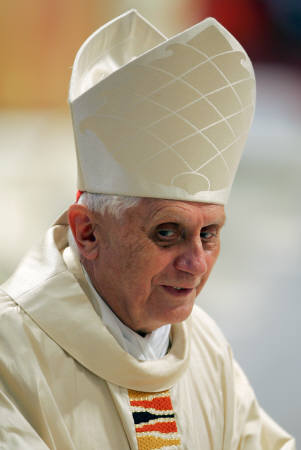
We already know what happened in the last couple of days about the Pope’s unfortunate statements and reactions to his words. Some, who does not want to see the truth, defend him as he did not say the words himself but ‘quoted’. Intended or not, quoted or not, we face a strong reaction from the Muslims at the moment, whose population are more than 1.5 billion. Those Muslims are the ones who had to deal with prejudice against them after 9/11, and the cartoon crisis recently.

The Pope Benedict XVI formerly known as Cardinal Joseph Ratzinger is known for his enrollment in Hitler Youth in 1941. He is also known about his opposition views on inter-faith dialogue and Turkey’s membership on EU. When all these considered, it is hard to believe that he didn’t intend to offend Muslims.

It looks like the Pope forgets about his position and importance of it. More than anybody, he knows how sensitive religious subjects are. Why did he need to quote from Byzantine Emperor Manuel II Paleologus? He should have chosen a better example, he should have thought of the reactions, especially at a time which the relations between Islam world and the West are tense. Certainly, it did not help for dialogue.

People on the street do not have to read the full text of his speech. Not everybody has to be intellectual or academician to interpret such words. People react to what they read on newspapers, which perhaps misquoted the speech. Even if the Pope did not mean to hurt Muslims’ feelings, he did. Now Muslims are on the street, tension is growing. A church was attacked in West Bank a few hours ago, and it would not be unlikely to expect similar events soon.

As the leader of the Catholic world, as somebody who says that he supports inter-faith dialogue, he should have more discretion. To prove that he is not against Muslims and he respects Prophet Mohammad, he owes a ‘real’ apology to Muslims. Otherwise, the clash of civilizations is going to come true pretty soon. And as some intend, it is not going to be anybody’s fault but ‘cruel’ Muslims’.

I miss the marvelous his holiness Pope John Paul II, and his good will towards Muslims. I remember him delivering a speech at Omayyad Mosque of Damascus, and starting his speech as “As Salaam Alaykum”. At his speech, he emphasized the similarities in Islam and Christianity, believing in the same God, sharing similar values, Jesus as a prophet of Islam, and how Muslims and Christians respect one another. The place he chose was a holy place for Muslims, mosque. The words he chose was careful and meaningful. The people he talked to were Muslims. And the quotes he used were from Quran.

For a true dialogue, we should forget about mistakes have been made in history. I could talk about Christianity as the religion of sword and refer to Crusade wars. But, would that solve anything? Are we trying to prove whose religion is better, or how can we co-exist in the same world? It is time for conscience for all of us, and the leaders should pioneer it.

*Published at www.turkishweekly.net on 16.09.2006

Monday, August 28, 2006

Palestine Diary: Never ending end (4)

5 August 2006, Nablus

Yesterday I got up early in the morning and went to the Notre Dame building that belongs to the Vatican for a conversation with a group consisting of rabbis and priests defending human rights. First, we watched a documentary about a Palestinian village where Beduins live, which was destroyed by Israeli soldiers and the people’s reactions to this. The people living in jerry-built houses and shelters are poor anyway, they live on animal husbandry. For several times they were asked to leave the village because an Israeli settlement was going to be built there but they didn’t accept. They resisted as much as they could. One morning, soldiers raided the village and destroyed all the houses. Upon this, some of the people were taken to refugee camps, and some have been continuing their life in tents in this dry, barren, Godforsaken place.

Abu Muhammad, one of the leading figures of the village says, “They not only dismissed us from the village but also make us build their houses on our own land. They make us build the walls around Jerusalem. Everytime I look at them, my eyes fill with tears! Turks reigned here but didn’t touch the people, but these men want not only our land but want it without anyone living on it. I will never work as their slave!”.

Palestinian workers building houses for the Israeli settlement say, “What else can we do? Will we starve to death? How else can we feed our babies? We have to work!”. Several years pass. Abu Muhammad and some more people keep on living in the area though they are occasionally disturbed by the soldiers. Now the Israeli settlement is active with its luxurious villas, shopping centers and wealthy residents walking their dogs. I can’t help but ask the group, “Don’t do these people ever look 100 meters ahead and realize what they have done? Don’t they feel pangs of conscience?”. The rabbi answers, “Most of them were smiling as the houses were being pulled down. You could see happiness on their faces.” Then I understood that they have no mercy, no compession at all!

Confused again, I go out and start walking towards Al Aqsa in the amazing streets of the old city. Nuns are passing by, then the Jews wearing long curly sideburns and black hats, and Palestinian children play around colliding with the passers-by. When I arrive at the gate of the mosque, I see that a battalion and a bunch of policemen surround the place. There is tighter security because it’s Friday today. They ask for my ID and I show it. I go ahead and get blocked by another soldier, then another policeman. My passport is checked for 4 times. Eventually an officer at the last entrance door does not accept my passport. He asks for my ID because the fact that I am a Turk does not prove that I am Muslim. And I start saying all the surahs I know. Then the officer looks at me with bewildered eyes and says, “afvan, afvan” and allows me to go in. There is such a big crowd but unfortunately women are not allowed to enter Al Aqsa. I could only see Omar Mosque.So be it, I’ll feel grateful.

I go to the hostel and what I see stuns me: some ultra-Orthodox Jew is chatting with the Palestinian officer in the lobby. And I greet them and get seated. Those Jews normally have such a cold and indifferent attitude that I get surprised when I see this man chatting like everyone, with his hat in his hand. Jonathan is 22, a student studying the Torah at the School of Thelogy. He says he sometimes chats with the foreigners that come to the hostel. Unfortunately his English is not good enough to have a deep conversation, so I cannot get the replies to many of my questions. But I learn that he has got Palestinian friends who are against war. Finally we even have a picture taken together.

Towards 4 o ‘clock, I meet Mete Çubukçu, a journalist and an author, who spent 3 weeks at the Lebanon border and arrived in Jerusalem yesterday. He mentions the situation at the border and Gaza. He, too, has lost his hope though he has been occasionally visiting this country for 13 years and he is familiar with all that’s going on. He says, “I don’t know how it could be solved, it’s too late for Gaza now”. There is 24-hour mutualbombardment at the Lebanon border. A lot of fires break outbecause some of the bombs fall on forests, garbage lies in heaps in the streets, there is lack of authority and fear reigns in everyone’s heart. There is no end to this. You can never tell what will happen tomorrow, no predictions or hypotheses work here. A waiter approaches us and says that it is “Shabad” now and it’s time they closed the cafe. We say goodbye to each other. I return to the old city, and Mr. Mete to his hotel room to get prepared for his flight to Turkey.

The destination in my mind is the Church of Holy Sepulchre, the place where Jesus Christ lies according to Orthodox and Catholic belief. It is a very big old church. In it there are priests from various countries in the world: Asian, African, European. I walk towards the grand bazaar and run into Amanda and Marian, the American and Romanian students I met in Bir Zeit. We have lunch together and visit the Wailing Wall to watch the Shabad ceremony. In Shabad time, you aren’t supposed to use electrical appliances from Friday evening until Saturday evening but people have found a solution to this: there are buttons that have been arranged automatically so that the lights of the houses and some electrical devices are automatically turned on. It means people don’t touch the buttons anyway, in other words, they don’t use electricity!

Because it’s the third time I have been to the Wailing Wall, I keep my visit short and we go to the Mount of Olives to see an incredible scene. The 2000 year old olive trees are being protected by special guards. There are Jewish, Muslim and Christian graves all around. Because it is believed that the resurrection of all the dead on the last day preceding the Last Judgement Day will start on this mountain, these graves are special. It is very difficult to find a place and it’s very expensive to buy one.

Passing by the graves, I walk downtown and on my way I encounter some Israeli soldiers. Marian starts a conversation and I, having found the chance, ask them what they think about the war and one of them says, “We hate this war but we support the war!!”, “What do you mean?”, “We have to defend ourselves”.

It’s the first time I have had a chance to chat with these soldiers, who are between the ages of 18-25. Actually I am so biased against them that I refuse to talk with them at first. But then, when I see their friendly attitude, I start talking. I see that they aren’t conscious of many things. None of them is a brutal killer with a burning desire to go to the border and kill Arabs. 5 minutes after I leave them, I feel a sharp pain in my stomach, like the pain of a knife wound. I can’t even walk. And I can’t figure out what it is, not a spasm I guess. Amanda takes care of me, she says some insect bit me. Thank God, she has medicine with her so she spreads it on my stomach. Could it be that I have been punished because I talked to the Israeli soldiers? I could believe anything in Jerusalem, this city is comething different.

The city is full of historical and holy buildings. There is a magnificent atmosphere. As I am taking photos and chatting with the Palestinian kids playing in the street, I suddenly realize that I am in front of the church where the tomb of Virgin Mary is. Every moment there occurs something interesting, one thing after another. I certainly want to spend a few months here.

We go to a small simple restaurant to have our dinner with Amanda and Marian. We run up a very high bill. We ask about it to the Palestinian owners and they say, “It’s Jerusalem here, in the western part the prices are double”. Anyway, they give a discount. And I say,
“You always say that you are poor and unjustly treated. But here everyone rips off the tourists. I have a bargain even for a bottle of water. Each time, I tell them that I am Muslim so that they sell things at their normal prices. Why is it this way?” He says,
“We are poor people, so you should help me, you are Western people”. ,
“OK, let’s help you but do you help Gaza and Lebanon?”
He replies, “Yesterday aid trucks went there but Israel wouldn’t let them pass. We cannot enter Gaza. Also we have our families here to support”
“You could help if you really wanted to, but you don’t. You find excuses and hide behind them. Unless you protect each other, how can you expect that from Western people?”

I cut the conversation short because I also can’t understand it all. When you go into deep, you see that they also want to leave the war behind. They want to lead normal lives like everyone else. Nevertheless, their indifference is killing me. The Palestinians living in Jerusalem are really different from the ones in West Bank. Money has such a power that it changes religions, nations; it makes everyone slaves.

When Amanda and Marian talk about Nablus, I decide to see that city. I get up early in the morning and go to Nablus. Now I am at An Najah University. There are lots of European students working voluntarily here. I get informed about these projects so that I can come later to stay longer. Now we set off for a tour in the city and the refugee camps.

6 August 2006, Jerusalem

Nablus is a 7000 year old city, thus it has a considerable cultural heritage. But its current state is miserable. Lots of teenagers are walking in the streets with guns in their hands. There is a lack of authority, the police don’t work because they haven’t been paid their salaries for the last 6 months, no one obeys traffic rules. More than half of the cars in the city are stolen property. The city with its population of 180 thousand suffered an Israeli attack two weeks ago. Israeli soldiers had been after someone again called Ala Sanaqra and they bombed an area full of municipality and government buildings. In the bombing, an old building dating from the Ottomans also got destroyed. The attack lasted for 3 days and 70 prisoners in a nearby prison were not released, nor were they transferred to another prison. They begged but no one helped them. Sanaqra had been hiding in a house close to the area and when the bombardment was over, he waved at people, saying, “Don’t worry, I’m alright” and walked away. It was the city that suffered, plus the injured and financial loss.

Amjad Rfaie, the chief of the Rehabilitation Center at New Asqar refugee camp says,
“these incidents are a part of our daily life. We don’t even get surprised”. New Asqar was built in 1964, 6 years later than all the other refugee camps throughout the country. Virtually everyone in this camp of 6000 inhabitants is unemployed. Before the intifada they had been working as workers in Israel, 35 km from here; but later on they got fired and now they live on aids coming from outside. They have no hospitals or schools. They use electricity and water illegally. Before Hamas came into power, their situation had been better but now all the foreign associations stopped their aid. Rfaie says, “I don’t like Hamas either. I support Fatah.But didn’t the world want democracy from us? So, we held an election, and Hamas won the elections. Now we respect that, but the rest of the world is punishing not only Hamas but also all the people here by ceasing their aid and support”.

The story of the rehabilitation center they founded is interesting. Rfaie and many other men like him go to prison in the early 1990s. He spends 5 years in prison at various intervals in 7 years. “The difference,” he says, “is that I didn’t have my wife and children with me, that’s all. Here I have them now but I still suffer, we live in a outdoor prison”.

When they are in prison, they decide to get together and do something. Neither fighting with guns nor all other political approaches work for them. So they found this center so that they could give hope to children or at least to the next generations. In 1992 they had their first library in the middle of the camp outdoors. They didn’t have even a hut, but now there are supporters more than ever and they do have a 3- story building. They execute lots of aid projects to which many foreign associations give support. They offer physical and speech therapies, and lessons on music, dance, computers etc. 18 foreigners work here voluntarily, most of whom are American. The managers say that they are trying to raise the leaders of the future. There are 300 children here, all of whom are very clever and nice. Their life is very hard but this center means hope for them.

I ask whether they receive any help from the government. They say, on the contrary, the Ministry of Social Services direct the ones who ask for help to the rehabilitation center. Civil servants don’t work anyway because for the last 6 months they haven’t been paid their salaries, 100 dollars a month.

On my way back to the hostel, Uhud, an employee at the center, offers to give me lift to the university. But, she says, she has to stop by the police station to have a report written because he had his car plate stollen several days ago. We set out together, and see that not only the camp but also the surrounding districts are miserable. The roads are impaired, the weather is hot, people are trying to reach somewhere in that hot weather with their kids. Houses, bombed and destroyed, huts...When we arrive at the police station, we see a sleeping police officer, and empty rooms. On the walls there are the posters of “martyrs” according to Palestinians, “terrorists” according to Israeli people. They have a photo holding guns and Al Aqsa in the background. There are maybe 50 of these posters on the walls. As we are walking in the station, where half of the rooms with worn out walls are empty, a female officer says “hi” to us and invites us to a room. The officer, who hasn’t received any salary for 6 months and who keeps on working in this wretched building in this hot weather, kindly chats with us as if everything was alright and writes the report Uhud needs. Then Uhud takes me to the school and we go downtown with 2 new hosts. I get a bit scared when I see some civil teenagers walking in the streets with their guns. The hosts say, “Don’t be afraid. It’s quite normal here. But when Israeli soldiers come here, you cannot find any of these men here”.The shops are closed, the houses have been destroyed, teenagers walking with guns in their hands, and posters of “shehids” who died for their country. This is Nablus. But what surprised me most is that the hosts accompanying me take everyhing as normal and continue their lives. They feel neither fear nor anger. They are concentrated on their schools and future.

As I am touring around the city, I notice an Ottoman toughra (sultan’s signature) on a clock tower. Then I learn that the architecture in the city belongs mostly to the Ottomans. When I learn that the house I see at a corner is a 400 year-old Ottoman house, I knock on the door and get in the house. 4 relative families live together in the same yard in this big house. Their surname is Aga, but they are Palestinian. Nablus is the homeland of “kunafa”(a kind of dessert), by the way. It originated here. There are several kinds of it.

I don’t stay long because there are many checkpoints on my way. A taxi takes me to the border and I see a queue of about 1000 people waiting. Soldiers don’t give permission, they just keep people waiting like this. I show my passport and pass, the others will wait God knows for how many hours. I get stopped twice at checkpoints. I am the only foreigner. When we get close to Ramallah, we realize that the road has been blocked. There are 2 tanks on the road and they block the road, no explanation or a valid reason! We wait there for about an hour in 40 C, then we are checked again and we pass. Arrival at Jerusalem also takes hours. To be precise, it takes me four and a half hours to go 70 km. Exhausted, I immediately go to sleep at the hostel.

It is my last day here today. They do it even in Jerusalem: Today soldiers blocked the roads again, they look for Palestinians in the vehicles they stop, find them and search them.


7 August 2006, Istanbul

It was a hard day yesterday. It was both because it was the last day there and it made me mentally exhausted to see so many things in such a short time and to face something new as I was trying to digest another. Twice, I found myself crying for no reason in the streets of Jerusalem.

Last night I went to the Palestinian National Theater to see a Palestinian movie I had wanted to see so much in Ramallah. It told the story of 2 villages in the Lebanon-Israel (Palestine) border, 100 meters away from ecah other and lots of mines laid between. It was in Arabic and there were no subtitles but it wasn’t so hard to understand because the effects of the incidents could be read on people’s faces.

For the last time I watched Al Aqsa from the terrace of the hostel. Then I packed and went to bed. In the morning I went to the airport. On the gate of Ben Gurion Airport there are huge “no guns” signs in addition to the usual “no smoking” signs. I joined a queue and an anxious wait started. An officer approached me and typical questions came one after another: Where have you been to, why did you come here, what will you do here, why are you alone, what did you do in Jordan?, and so on. Then he took a look at my old visas. When he saw the visas of United Arab Emirates and Pakistan, a sour look came over his face, as if he disliked Arabic. He asked me why I had been to those countries, and he took my passport and walked away. After a few minutes, he came back with his manager. My dear US visas and cool Schengen visa hadn’t worked.

No sooner did the manager start asking the same questions than some man approached us and said in Turkish , “Is there a problem?”. Then he turned to the officer and said, “Why are you keeping all of us waiting? It’s obvious that she is just visiting the country, why are you treating her like this? What is your justification?”. The officer asked the man, “Who are you, mister? What is your title?”. The man asnwered, “I am a colonel. I am Turkey’s military attaché”. The officer withdrew, and muttered things like, “We just wanted to ask a few questions, OK you may pass” and he gave my passport back. But he didn’t forget to stick certain labels on my bags, meaning “ultra detailed search is needed”. There are 4 colors of labels to stick on bags and they are arranged according to the officers’ suspicion level. For instance, mine was lilac. In the second step, the bags are being searched according to these colours, some very casually and some very carefully. I got surprised and I thanked the colonel. He said, “This is the way they are. When they see ‘Pakistan’, they treat you like a terrorist, but they fear us”. Well, I didn’t know that Turkish army has such an impact on Israel. Then my bags were opened, one by one, all the wraps of the gifts were torn, the bags were examined carefully for half an hour, including the buckels of my sandals. Then I went to the THY (Turkish Airlines) counter. At that moment an Israeli officer signed at me, like, “I am not working. Try the next window”. The colonel made an effort again and said, “Come with me”. Again the same reaction, as a result the officer apologized, “I didn’t know, sorry.” And she asked gently, “Would you like aisle or corridor?” and she gave me a wide area right behind the business class. I again thanked the colonel, who came as a godsend and immediately another control started. All my IDs, diplomas, everything including the interiors of my toothpaste lids! Finally I made it to the plane and got seated with my T-shirt with the Palestinian flag on. And I felt as if I had achieved something big, and I felt so free. I arrived in Istanbul, leaving my heart in Palestine.

Palestine Diary: Jerusalem and Confusion (3)

1 August 2006, Jerusalem

I went back to Bir Zeit University the next morning, to bid goodbye to everyone I know. I first found the camp coordinator Gadah, she said, “You couldn’t even visit my house, I was going to cook for you!” and I could just say, “Next year I will, hopefully”.Both of our eyes filled with tears. I said, “You should visit Istanbul”, he gave me university T-shirt as a present. I called Ahmed and Lauri as they were showing 2 people around, people who came for the camp though it’d been cancelled, one from Romania, one from the US. I asked Amanda, the American girl, what her family thought about her visit to Palestine and she said that they didn’t know that she was here. She told her mother that she was going to Egypt and her father didn’t even know about the imaginary Egypt journey. And these two wanted to come and see it here despite everything. We had lunch together and chatted.

We started mentioning Jewish Palestinians who are living in a northern town. They all voted for Hamas.Then we started comparing the PKK and Hamas. Neither foreigners nor Palestinians regard the PKK as a terrorist organization. What is Hamas is the same as the PKK to them.

It took me hours to go to the dorm and pack; for some reason I didn’t want to leave this place, I didn’t want to leave Ramallah even if my destination was Jerusalem. I bid goodbye to everyone and set out. Actually I had 16 km to go but it took me more than one hour becuase of the checkpoints on the way. We had a chat with Namir, who was sitting next to me. Namir, who is a student at Bir Zeit and travels from Jerusalem to Ramallah for school. She lost his mother 2 years ago; and as she is the eldest of 5 siblings and as an elder sister, she has the responsibility of taking care of the household. While she was talking about these, an Israeli soldier stopped the bus and ckecked the ID cards. I realized that Namir’s eyes filled with tears. When I saw her like this, I couldn’t stand that. I asked, “Don’t you ever get used to this? Are you still affected so negatively?” She said, “Neither will I get used to this, nor will the situation get better, I don’t believe that the problem will ever be solved!”. We were in Jerusalem now and I could feel that I was no longer in Palestine, I was in Israel now. The local teleophone line I bought in Ramallah went dead, now occasionally it comes and goes. I got off the bus at the Damascusgate and started to look for the hostel I was going to stay at. But both the bags on my back and the ones in my hand were so heavy that I could hardly walk. I took a taxi but the driver told me that he couldn’t take me to the hostel because, all the roads had been blocked. Desperately I got off, took a look around and saw a grocery store. I asked the Palestinian shopowner about the hostel and he said it was just a 15- minute walk from there. But it was rather difficult with those bags. They let 10-year old Ahmad, their son or the apprentice, help me for money in return, so we set out. I followed Ahmad, noticing ultra-Orthodox Jews, Palestinians, priests, policemen, soldiers around and finally we arrived at a public square.

Hundreds, thousands of Israeli people, including kids were heading towards a direction with Israeli flags in their hands. Because of the heavy burden on my shoulders, our inability to find the hotel, and lack of communication (because Ahmad couldn’t speak English, and I couldn’t speak Arabic), I gave up and entered a hostel.I thanked Ahmed and dismissed him. My reservation started tomorrow morning at the hotel anyway, so I was going to spend the night at this hostel. I left my bags and went out in order to mingle with the Jews I had just seen. Meanwhile, I learnt that all of them were going to the Wailing Wall (the western Wall) both to pray and to spiritually support the war. Also that day it was the anniversary of Israeli settlers being dismissed from Gaza. I was stunned when I heard the words: “support the war”. Thousands of Israeli people of all kinds, old and young, kids and adults, had come to that spot for this demonstration by buses from the North, South, everywhere. Some teenagers were wearing orange headbands, some were seated at a corner with a book of prayer in their hands, praying while moving back and forth, some are running around. And I, confused, sometimes walk sometimes stop. I pass by churches, hearing call for prayer from the mosques. There are Armenian restaurants along the road. It is rather difficult to describe the atmosphere and my feelings. At last we arrive at the Wailing Wall. There is tight security at the entrance, they look inside the bags.

I guess there wasn’t any Muslim among them other than me. They didn’t feel the need to do body search on me, thinking that I was one of them. And I entered the area. The rabbi is uttering words in Hebrew, sometimes loudly sometimes in a crying voice, people are saying them along with him, listening to him. I felt strange. How come all these people, all these faithful people support the war? I took a few photos, recorded a few scenes and I couldn’t wait any more to set out and go back.

Passing through covered shopping arcades, I walked and walked in the old city, and at last I got lost. I was so impressed by the things I saw that I forgot the name of the hostel I was staying. I was looking for the public square I first saw when I came to the city but all the streets looked alike. Buildings and pavements made of stone, hundreds of narrow streets... It had got dark already, and all the shops were closing. I walked into a market and learnt the name of the square, and started walking again. The Jews had finished their demostration and now they were going home-it was crowded around. Palestinian shop owners were staring around with surprised looks. Yes, everone lives here together but not in peace, they ignore one another. It’s full of Israeli gunmen around anyway. Finally I found my hostel, had something to eat and now I felt really confused after the things I had seen that day.


3 August 2006, Jerusalem

Unfortunately, the internet here is far more expensive than Palestine, I cannot write that often. I am about to end my travel, herefore I am running short of money but everything’s alright. As soon as I got up yesterday, I moved into the hostel I had booked a room at. It’s much more comfortable here, it is thounds of years old, looks like an old castle and also it is in the middle of the old souq. There are people from Finland, Czech Republic, Canada, Palestine, Israel, Ireland, Germany, Italy, Belgium, England and Slovakia. I had a chat somehow with all of them, and everyone favours Palestine, including the Israeli people. War and politics are in every conversation.

At the entrance of the Hz.Omar Mosque (Dome of the Rock), which many people confuse with Al Aqsa, you have to prove that you are Muslim. The entrance is denied to non-Muslims. First I enter the Omar Mosque, it is the time for noon prayer, it’s crowded in the mosque. Then I go to Al Aksa and something incredible happens. I start crying as soon as I enter the place, even before I take a look around. I sit at a corner with a tissue in my hand, I almost sob, bewildered at myself, asking”why are you crying!”. Later on I notice that is because of the magnificant spiritual atmosphere this place has. The construction is simplistic, there is nothing around that will make you cry. I mean, nothing visually impressive, but the atmosphere is indescribable. Words would not suffice, one needs to exprerience. I don’t want to go out, I sit there for a long while. Then I see the basement floor, which is older; finally I go out, fascinated. I pass through covered shopping arcades again and walk towards Jaffa Gate to visit the Museum of the Tower of David. The tower consists of several sections- I mean, there is a minaret in the museum, but now it isn’t open to public, maybe the mosque has been destroyed, I have no idea. The museum tells the history of Jerusalem. In each section you can see various historical periods. The Ottoman period seems pretty small and dull when compared with other sections, although the Ottomans ruled over this land for 400 years. For this period there is also an interactive “film”. At the beginning, there is a depressing piece of music and the descent of the Turkish flag and the ascent of the English flag, later on a joyful melody starts and 1948, the ascent of the Israeli flag, happy ending! But, English ruling is depicted as more positive than the 400-year reign of the Ottomans.All the walls in the “old town” part were built by (the Ottoman emperor) Suleyman the Magnificent. When the Palestinians learn that I am a Turk, they talk about it in pride but the museum doesn’t give that much attention to Turks.

I meet a rabbi in the evening, a rabbi whom I had a contact with before I came here. His name is Jeremy Milgrom. He is an opponent liberal Israeli rabbi at his 50s. At the time we meet, a group of Jews are walking towards the Wailing Wall but not to protest anything this time, for prayer. They aren’t carrying Israeli flags. It is one of the important religious days of the year and all of them are fasting, from yesterday’s sunset till today’s sunset. We also walk along with them and I listen to Milgrom’s ideas about Israel, the war, and all that’s happening and I get amazed. “What is happening between Israel and Lebanon cannot be called a war”, he says, “It’s an unfair attack by Israel. It’s a raid and an unfair occupation” he adds. He tells me about his worries about his children’s doing their military service right now, and criticizes Israeli policies. At this moment, a radical Jew, dressed up in a black jacket and wearing a hat, asks for donation and Milgrom starts speaking in Arabic, just to see the his reaction. He says, “I thank God” and walks away. Milgram says, “This city could have been a peaceful city, but now one can live here this way only under security precautions.Actually there is no communication among various communities”. By the way I learn that in the whole country there are only 3 or 4 schools that both Israeli and Palestinian children can attend. Even this seems to be a big improvement to me.

Then I learn that Jews will try to get into Al Aqsa today. According to Judaism, this is on the Moria Hill where Solomon Temple was built, in other words, where Prophet Abrahamwas born. Jews gained admission to this place, but the police may do anything. No Muslim man between the ages of 20-45 is admitted. The last time they tried to do so in 2000 Ariel ªaron also joined them, they say it was in the second intifada. They say a big opposition may occur.

I found it strange when I saw that Palestinians’ Jewish accessories, key holders, and even T-shirts that read “Don’t worry, be Jewish” on them are sold at the market here. I asked about this to Fahmi, an employee at the hostel, “They need money, what else can they do?” he said, and I said, “Then it means they accept failure, they cannot claim Jerusalem any more, it is all words and no action”.

I haven’t lived through a war in Turkey but in the case of an earthquake, all people unite, everyone collects money and helps people far away from them. I couldn’t see such mutual support here. It seems as though no one cares about what is happening in Jerusalem and no one opposes to the Israeli demonstrations supporting the war. I asked why it is this way and he said they have given up, they have been forced to give up. Once you find a job and save your life, you try to support your family and grow individualistic. One more thing, when you are young, you are more active and you have faith in change; but then you see how powerful they are and that it is impossible for you to stand up and fight. He says he sometimes feels suspicious of even his friends, are they spies or so? Everyone is “sold”, one by one. Enterprises to set up an association, or unification are blocked, they have no leader here. The ones living in Jerusalem don’t even have their citizenship. They get a special travel document when they travel abroad. The situation is rather complicated, and multi-dimensional, what is more, saddening. It all seems hopeless to me now.

3 August 2006, Jerusalem

I thank God that the police didn’t let the Jews to enter Al Aqsa and the possible events have been prevented. I got up early in the morning and went to Betlehem. Ittakes 15 minutes to arrive at the “wall” by the vehicles that depart from the DamascusGate. Then you arrive at a big terminal that reminds one of an airport and you show your passport three times, you get searched twice, you go through X-ray machines and go to West Bank. Betlehem is a Palestinian city with its population of 22.000-half Muslim and half Christian. The Church of Nativity, where Jesus Christ was born is downtown. It is a very old big church, there aren’t many tourists around. Tourism has been affected badly due to the current events. I visit another Omar Mosque and have a chat with the officers here to get their ideas. They complain about the decrease in tourism. There are people who haven’t been paid their salaries for months. I ask whether they collect money for Gaza or not, but no! They transferred all their responsibility and right to Hamas. Okay, I say, “I want to donate some, but how could I be sure that Hamas won’t buy weapons? I want this money to be used for food and medicine”. They say, “Just trust” and they promise, but I don’t find them very reliable. Therefore, I donate just a little sum. The streets are full of beggars, and kids asking for ice-cream.


Then I take a taxi to go to Heroid Palace, 10 kms from here in Palestine, but it is in an Israeli military zone. The driver accompanies me, greets an Israeli officer and then I buy a ticket and walk around the palace-I mean the remains, taking photos. When I come down, I get happy to see a scene: the Israeli officer chatting with the Palestinian driver. Then again way back to Jerusalem through painful borders. I take photos of the slogans and graffitis favouring peace and freedom on “the wall”, reading things like, “let it go down”, “the wall can’t hide the truth” etc.

In Jerusalem, at the spot where I get off the bus, I see the sign of Garden of Tomb and I walk in. According to Protestant belief, this is where the tomb of Jesus Christ is. It looks like an open air church. As opposed to Protestants, Catholics and Orthodox people believe that his tomb is in the Church of Holy Sepulchre, which I will try to visit tomorrow.

For the first time I am visiting West Jerusalem. It looks like a European city with its stores. Life seems quite normal, modern and based on consumption. It is really different than the Old City. It is full of police officers and soldiers here, too. I can see around 500 policemen or soldiers in just one day. Security guards check bags at the entrance of even small shops.

By the way, I just realized that I have been staying at an Armenian district. Right next to that, there is the Muslim section, then the Christian one and the Jewish. These districts are next to one another. There is a little bit of interaction between the Christians and the Muslims but the Jews are totally isolated. This is the divison in this old city, which is enclosed by the city walls once built by Suleyman the Magnificent

Palestine Diary: General Impressions (2)

29 July 2006, Ramallah

Palestinians are incredibly friendly and hospitable. I saw only 5 foreigners here in 4 days, I mean, there aren’t many tourists, nevertheless they are really friendly towards them. Maybe it’s because generally the foreigners are members of NGO’s that struggle for peace. Everyone greeted me in the refugee camp, they all smiled. When you have even a short chat, they invite you to their house. I haven’t been to one, yet.

According to what people say, 80% of the men here are employed, and 20%of the women work. There is employment, but salaries aren’t paid regularly. The public is not very satisfied with the current government. What is more, many associations that struggle for peace just left Palestine after Mahmoud Abbas became the president. But people talk about these only to express their ideas when asked, not to complain. They are rather patient and bare those hardships silently.

When it comes to the jobs they have, they mostly deal with trade, sales in Ramallah, banking and transportation. That means, Ramallah is a developed town. If I am to compare, it reminds me of Adapazarý (Turkey). The ones in the refugee camps also come here to work. Because the camps have existed for 50 years, the people there, have their own settled life style. Almost everyone makes a living in one way or another. Of course the case is different in Gaza but I cannot go there even if I want to at the moment. They say a special permission is required. I want to go to Nablus but they say it is dangerous to do so.

Ramallah is a cosmopolitan city, the churches and the mosques are side by side. There aren’t many Jews but there are plenty of Christians. There are foreigner restaurants: Italian, Chinese, Mexican. There are nice hotels, and even pubs. Alcoholic drinks are sold at the supermarkets. I haven’t seen any radical men wearing long robes and beard. There are a few with pushi. Most almost dress in the Western style. 80% of the women cover their hair but no one despises the ones who do not cover their hair.

Literacy rate is 88%. Everyone in the city center can speak at least a little English but it is much more limited in the camps naturally.

Some of the teenegers, generally the ones who don’t attend a university get involved in political organizations. Some directly go to prison right at the beginning and they spend years in prison without even being called to trial.
Here is our conversation with 18 year old Thaer, who I had a chat with in the camp yesterday:

-What is the capital city of Palestine?
-Jerusalem
-Well, can you go to Jerusalem?
-No because it’s forbidden.
-What is the capital city of Israel?
-There is no Israel!
-How come?
-Israel doesn’t exist! , he said and turned his head away.

Ahmad, who showed us around yesterday, also feel sorry because he isn’t allowed to go to Jerusalem. In last Ramadan, he says, it had been 8 years since his last visit to Jerusalem so he decided to go there secretly using some hidden routes and he got caught by the soldiers and he begged them, “Please, let me go. Just give me permisson for half an hour” and they let him go after taking his ID card. He kept his promise and returned back half an hour later. He went to Al Aqsa Mosque and called his mom. He says, “it was an inexpressible bliss for me”.
Yes, it is forbidden for the Palestinian to go to Jerusalem, only those who have been living there since the first intifadahave got a private Jerusalem ID card and only they can go to Jerusalem. And Jerusalem is just 16 kilometres away from Ramallah.

Palestinians are surprisingly mature about their ideas about Jews. They don’t feel hatred for the Jews because of their religion! But I need to emphasize that most people from West Bank haven’t ever communicated with an Israeli other than Israeli soldiers. They are aware of the seperation of religion and politics.

UN is not a very much respected organization by many people. There are UN vehicles driving around the city, people call them: “Unneeded Nations”

When I greeted an old woman in the refugee camp, the woman thought that I was one of the activists and she yelled at me that she didn’t want Israeli soldiers or their tanks there. I was told a very interesting story, which actually was quite normal for them: The son of a Palestinian father got shot in the street and the father donated all the organs of the child to Israeli children. I wanted to see the man but they said he was in Gaza. This striking event attracted a lot of attention in Israel.

They have got so accustomed to these hardships since they were born that they have no fear, it has become a part of their life, both the things that might happen to them and the events that arise everyday in Gaza and Lebanon. No one says “we don’t want war any more” because they have no such hopes; their attitude is like, “it has always been this way and it will always be”... They continue their lives, they hold their wedding feasts, have their coffee at Stars&Bucks(not Starbucks) because life goes on, and they try to survive.


30 July 2006, Bir Zeit

I had a terrible night. The cold I caught two days ago got worse, I suffered in the throat and the ears. And when I woke up I felt so weak but because I didn’t want to waste my time here, I took a pill and went out. Bilgen was there to take care of me. She suggested to rest and take the day off but I didn’t want to waste time by sleeping. This time the destination was Jericho that is 60 km away. The city, which have existed apparently for 11 thousand years, is known to be the oldest city in the world. I was very excited and nervous when I hit the road. We were in a shared taxi with locals. The taxi first drove out of Palestine and entered Israel which didn’t make sense as I thought all West Bank was Palestinian land, then a long wait at the checkpoint in the cab and then Israeli soldiers arrived and checked the ID’s. In the meantime the soldier standing next to me pointed his gun at a vehicle, and put his finger on the trigger, aiming at something. The other soldiers were having a laugh together then, that means, their aim was just to show off and frighten people. There was another check point 10 km away. When it was our vehicle’s turn, a soldier signalled to mean “proceed” but the driver interpreted this as “don’t stop, go ahead” and accelerated. The soldiers started shouting, I got scared and muttered things like, “stop, wait”. We turned back, they collected our ID’s, told us to wait for a few minutes and then we continued.

We kept going, the driver was too fast in the bends in the mountains, giving me a fright, as if he wanted to go out of Israeli territory as soon as possible. We arrived in Palestinian territory and went downtown. This is apparently the lowest place in the world, the altitude is below sea level, about –385 meters and has a rather dry and depressing climate. Feeling exhausted, we searched for a place to sit and ended up in the cafe of the town. People were dressed up in traditional clothes, the men were in long robes and wearing pushi. There is a big amount of black people here, surprisingly.

A man at his 60s approached and greeted us. He showed us his tourist guide card and offered to show us around the city. We didn’t have many other alternatives, therefore we had a bargain and accepted his offer. We saw one of the palaces that belongs to Arafat, then we visited Hisham’s Palace. This palace, which was built in AD 740, have suffered so many earthquakes that now there are only the remains. The building that have traces of Christian, Byzantium and Iran traditions reflect many periods in history. We went on to Alsa River, took photos of swimming children and got informed about the city.

Jericho, which came under Israel rule after the 1967 Six Day War, came under Palestinian control rule in 1994. According to the Holy Bible, after being baptised in the Jordan River, Jesus Christ is sent to the Mount of Temptation just before his becoming the prophet for a test. He withdraws into solitude for 40 days and nights and fasts. Today, the place where he spent his time then is used as a monastery under the control of Greek-Orthodox Church. This monastery has become one of the most important centers of faith tourism. We are so excited as we are going up by the cable car. When we meet the passengers in our teleferic, we discover that they are from Greece and we start talking. The couple, who have got a tourism agency in Athens, spend most of the year here, guiding the tourist groups that they take here. They say that they love Turkey yet they feel a bit disappointed when they hear that I haven’t been to Athens, yet.

We get off the cable car and start to climb up the mountain. Yorgo Kistaris says that the church is most probably closed but that the priest is a friend of his so he may help us to get inside. The door is locked, Yorgo calls the priest and the priest opens the door and lets us in. First, we visit the section where Jesus Christ had his rest. It is really a strange feeling to be here. The church is full of old and precious paintings. There is a sacred atmosphere that is hard to describe. Then we go on to the yard and the rooms here attract our attention. They say monks stay in these rooms but only three people have been living here for a long time. This monastery, in this godforsaken place, is far away from the Israel-Palestine conflict.
Father Gerasemos is a Greek at 72.He has been here for 22 years and has never left the place. Formerly, while he was leading an ordinary life in Salonika as an accountant, he started searching for the meaning of life and ended up here. He loves Turkey and Turks very much. He tells us about things but sometimes he becomes lost in thought as if he is in a dream. We have long conversation. He fetches a watermellon for us, we eat it together and then he says, “come with me, I’ll take you somewhere”. As we follow him, even Yorgo, who has known him for all these years gets surprised because the priest is taking us somewhere that is normally closed to the tourists. We pass through doors, rooms and get out and see a sepulchre here, on it there is a piece of writing in Greek. Yorgo, surprised, translates it for us, “Hatred causes only evil and death, love is the leader of all good deeds”. But the interesting thing is that this grave is the priest’s own grave! I get goose bumps. On the stone there is the year of birth but the year of death reads “20...”. I don’t know what to say. The priest is speechless too, we just stare at each other. He says “Please come again, you could even stay here” and bids us goodbye after giving some gifts to us.

Feeling strange, we go down together with the Greek couple. They insist on having lunch together. We go to a restaurant, we have our lunch along with a sincere conversation. They say they will go to another monastery and that they can drop us at the Dead Sea if we like. But I start to feel a bit weak so we decide to go back to Ramallah. Therefore, I miss the chance of seeing the tomb of Moses, which is rather close. We arrive at the city center after the long waits at the checkpoints and our exhausting trip; and we arrive at our dorm in Bir Zeit. We learn that 60 people died in Lebanon as a result of the Israeli attack this morning. We get depressed. There is nothing that we can do. Can we do something if we can ever get there? But they say Israeli soldiers wouldn’t let us. It is now harder and more dangerous to go to even Nablus or Nazareth. Yesterday, while a student was going to Nablus, a man travelling in the vehicle after him was caught with bombs that weigh so many kilos and the bombs were annihilated before everyone’s eyes. I now better understand the hopelessness of these people here.

I feel a little bit guilt because I am having a touristic trip here. From now on, I will make more effort to talk with people to learn about their feelings and ideas. Hopefully, I will get better soon. I am planning to visit an orphanage and get involved in a conversation with prisoners.

1 August 2006, Al Bireh

I went to visit the boy I met at the border today. After graduating from Bir Zeit University Economy Department in 2005, Faris Arouri started working for “Youth and Peace Forum” and became the chairman in a short time. The association, which organizes many exchange programs, believes that the “solution” lies with the young generation. We have a conversation about Palestine with Faris and I see that there are many things that I still don’t know.

West Bankand Gaza were under the control of Israel between the years 1967-1993. In 1993, when the desired outcome wasn’t achieved after the negotiations in Washington D.C involving Syria, Lebanon, Palestine and Israel, the representatives of Palestine and Israel started negotiations in a free zone away from pressure: Oslo, Norway. In the end, they agreed on a treaty, which said Palestine was to be free in its domestic affairson the condition that its foreign affairs and border controls would be under the control of Israel. The majority of the Palestinians regard this treaty as treason and most favour resistance.

Of course the new regulations cause longer bureaucratic procedures in public affairs. Formerly, only the Israeli approval was required but now with this treaty, first Palestinian and secondly Israeli approval are required. Therefore, actually this all saves Israel the trouble of dealing with many cases firsthand. On the surface, it seems that Palestine has some kind of discretion but still approval and the authority to make the final decisions belong to Israel. However, Israel doesn’t remain loyal to these decisions, it continually makes surprise attacks, enters zones that are forbidden to Israel according to the treaty, prevents the right of the Palestinian police to carry guns and at last invades the area in 2000 again.

Palestinian territory is divided into 3 zones: Zone A is the region that is under Palestininan control. It is completely forbidden for Israel to enter this zone. 8% of Palestine comprises Zone A. For example, Ramallah is in Zone A, but Israeli soldiers make attacks and fire guns in the street twice a week and the police can(/do) not do anything. In Zone B, civil administration belongs to Palestine and military administration belongs to Israel. For the 20% this is the case. As for Zone C (72% of the country), it totally under the Israel rule.

Hebron, with its population of 100 thousand is only controlled by Israel. The distribution (of the zones) is not precise. Ramallah is in Zone A whereas the Jalazone camp, which is just 20 km away, I visited the other day, is in Zone C. Another area which is really close to us is in Zone B. It is really hard to tell them apart.

I ask about the procedure that Palestinian citizens have to follow to go abroad with their passports. Many countries recognize the passports and give visa at the consulates in Ramallah and Jerusalem. What is surprising is the fact that Lebanon, Syria, Iraq and Libya do not recognize Palestine and also don’t let Palestinians enter their territories. These countries, which display such an attitude due to their opposition to the 1993 treaty, accept neither the Palestinian passports nor Israeli passports. Saudi Arabia makes it very hard to get a visa. Egypt makes Palestinians wait in cells for days even for transit passages through their country. The ones who make it easy to go abroad for Palestinians are European countries.

Palestinians do not care any longer about how the world sees them. But they are aware of the seperation between the public and the government. Yes, most people in the world favour the freedom of Palestine but just ideologically, they cannot reflect this in politics, or put it into practice. Well, then, does this fact disappoint people? Does it cause hostility? No, at first they say they felt oblivion, and dismissal but it’s been 50 years now; they gave up hopes and expectations of the world; they feel no hostility, though, they just know that no one but they can help themselves. Arabs supported their movement in the 70s, boycottes were done but those were the old days. Now children get killed before their eyes and no one says anything.

I ask where they find the power to fight the strong army of Israel and their government, which have the support of the whole world. I get the reply, “Just the desire to be free and independent”. Governments can change, the decisions taken or the policies followed can change but the belief of the people in freedom and independence never changes. In other words, leaders, politicians, both the ones from their own country or the rest of the world do not change the people’s ideas and beliefs. There is a very strong and old culture here; cities where history, humanity started, lands where prophets lived. 50- year captivity, or the opportunist policies of temporary politicians remain so weak when you think of the culture here. Maybe that’s why there are no pictures of the leaders on billboards in Palestine as opposed to other Arabian countries. People believe in just themselves.

There is no discrimination of Sunnites or Shiitesbecause there isn’t any Shi’a here. They say it wouldn’t matter anyway even if there was because religion has never become the reason for a coflict in Palestine. For example, although George Habash (Secretary-general of Popular Front for the Liberation of Palestine), who is known as “doctor” and is a Christian, got the support of the public with his opposition to Western imperialism and ziyonism; and his dismissal of the Oslo treaty, which Arafat signed in 1993 as treason against Palestinian revolution. What is more, the Palestinian Jews, andChristians haven’t suffered discrimination. There is a crucial point that all these people unite and that is independence.

People always watch the news in every shop in Ramallah, in the dorm, at school, in internet cafes, at the barbers, on TV everywhere. Popular culture, TV shows and series haven’t made them slaves. But they don’t react when they hear saddening news, it has become a part of everyday life. Maybe they just keep this worry to themselves, I am not sure.
For dinner, we meet Mohanad Yaqubi, a Palestinian film director, his wife Rani, who is the daughter of a Serbian mother and a Palestinien father; and Isthtiyaq Shukri, whose book The Silent Minaret has recently been nominated for the European Union Literature Award.

Mohanad is a very young director, he shoots short films. He has shot films in Venezuela, France and Tunisia. He has grown sick of politics and the condition his country is in. He says, “we have a culture and it isn’t composed of only Israel-Palestine conflict and I am trying to reflect those other sides of my country”.

His wife Rani studied sociology and anthropology at Bir Zeit University, she is also a musician. Rani’s mother, who was born in Yugoslavia, was an activist supporting Palestine in the 70s and Rani’s father was in Serbia then. They met each other, and later on got married. When Rani was 14 years old, they immigrated to Palestine. At first many people were prejudiced against her because she was Serbian but she says, “We came to Palestine because we were ashamed of the deeds of our country and we didn’t want to be a part of the war”. She missed her country very much at first, but now she says her home is Palestine. It’s been just 17 days since Mohanad and Rani got married. Mohanad’s family didn’t approve of this marriage for some time but later on they accepted.

Istihyaq Shukri is a Muslim author from South Africa. In his debut The Silent Minaret he mentions the hardships that minorities suffer in Africa and his anger at his country’s change for the worse day after day, injustice, and the loss of the culture there. Maybe that’s why he often visits Palestine.He says, “I find the culture I miss here on this land” and he adds that his next book will be on Palestine.

Faris’ father also joins us. Tayseer Arouri is a professor at the department of Physics at Bir Zeit University and a former politician at the same time. I ask him how he is perceived as a leftist politician and his reply appals me: In 1970s, just before he got married, some men break into his house at midnight and he is immediately taken to prison. He spends 45 months in prison without any accusation or evidence. Every 6 months his imprisonment time gets longer without any explanation. “The first two years were relatively easier, we had long conversations, we discussed issues. The right to use the library was limited, we had permission to spend only half an hour once a month. In the third year, the prison got really crowded and we began living in such a small space that it was 44cm2 for each men”.

Arouri was offended by execution without being questioned, rather than the years spent in prison. “No explanation was made”, says he, and mentions the director of the jail who began his duty in Arouri’s last year. The director, who was a Jewish Turk, got along with the prisoners. No matter which ideology they supported, the director had a positive and friendly attitude towards them all. Once, Arouri went to his room and asked why he was in prison and said that he just wanted to know the reason. The director called for him one week later and read aloud the letter that he’d received from MOSSAD, “Israel thinks that you might have ideas that may hurt them”. In other words, there is no action that Arouri committed or no valid reason at all! Just thoughts and hypotheses.

The director saw Arouri’s lawyer several times, he entered into correspondence and at the end of 3 months Arouri got released. “But it wasn’t over,” says Arouri, “in 1983 I spent 18 days in prison, and in 1994, 1 year”. He talks about these in a very calm manner, as though these were quite normal memories in his life. He is a professor at his late 50s and is not interested in politics as much. Everyone I talked with favour the two state solution. It may mean making a concession but they are sure that Israel wouldn’t adopt the idea of one state solution. (Palestinian gov.) The fact that they aren’t allowed to enter Jerusalem no matter their ideas or religious beliefs are offend Palestinians deeply. And today I am going to Jerusalem, their apple of the eye, their capital city though not officially; leaving Ramallah behind. But I promise both myself and them that I will come back one day.